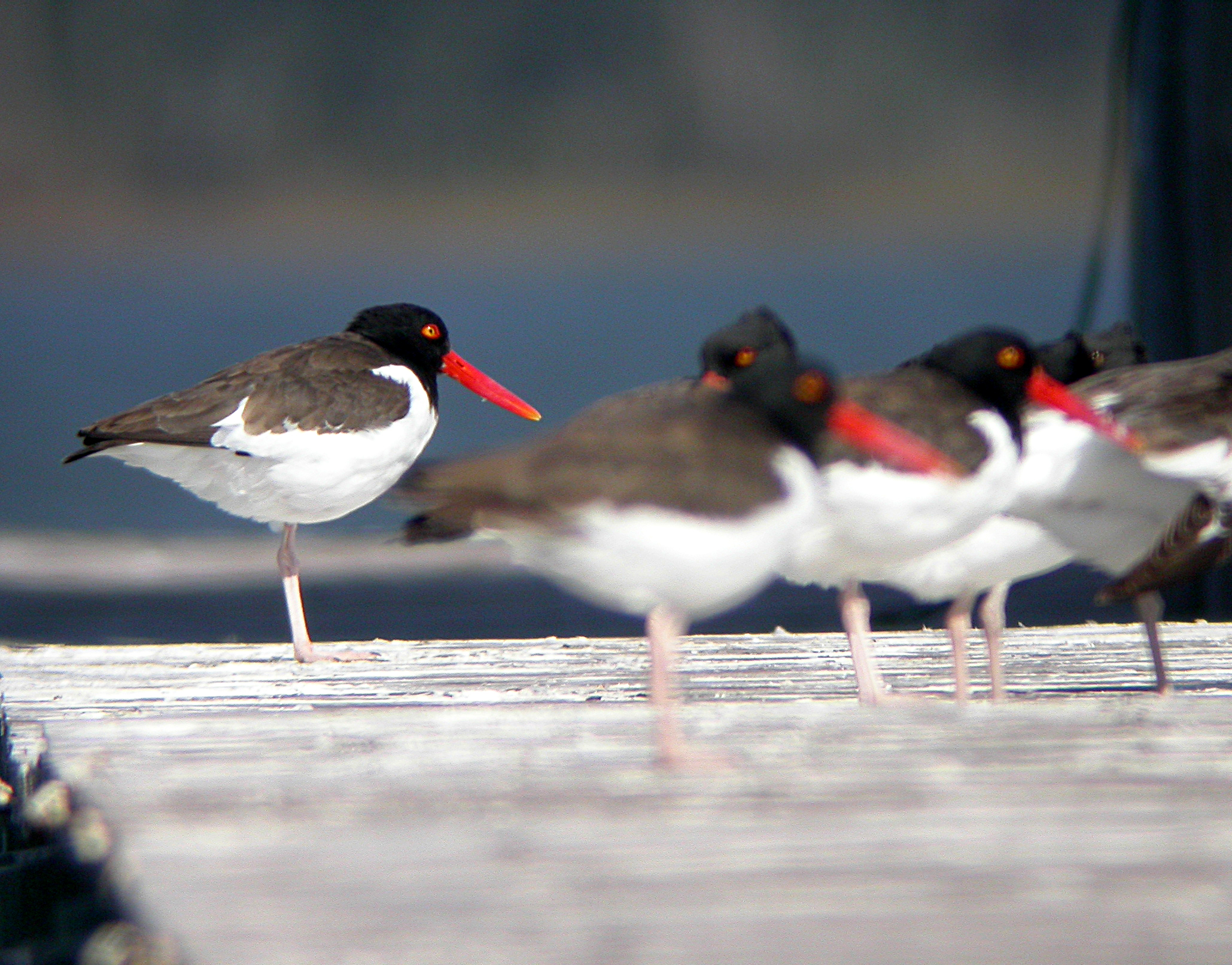
With striking black-and-white feathers and bright red bills, American oystercatchers are among Florida’s most recognizable shorebirds. These coastal birds feed on oysters and other shellfish, making them an important part of our state’s coastal ecosystems. They form strong pair bonds and often return to the same breeding territories year after year. But with only about 228 nesting pairs in Florida, their future is far from certain. Habitat loss, rising tides, and coastal erosion threaten the places they depend on to raise their young. Protecting and restoring their nesting habitat is essential to helping these distinctive shorebirds thrive along Florida’s coast.
They need elevated coastal habitat where they can nest without their eggs being washed away by high tides, storms, and boat wakes. Even a single unusually high tide can wash over a nest and cause the loss of eggs. On Florida’s South Amelia River, a restoration project funded by our Foundation’s Conserve Wildlife specialty license plate has created higher, more resilient nesting habitat for these rare shorebirds.
Along the river, American oystercatchers often nest on oyster rakes. These long ridges of old oyster shell provide open areas above the surrounding water, but storms, erosion, and repeated boat wakes can gradually lower them. As the rakes lose elevation, nests become more vulnerable to flooding. Raising the height of an oyster rake can give adult birds a safer place to lay eggs and raise chicks.
The Florida Fish and Wildlife Conservation Commission (FWC) restored part of a frequently used oyster rake within the Northeast Florida Aquatic Preserve. The project added 35 cubic yards of recycled oyster shell and 120 habitat modules designed to stabilize the site, reduce wave energy, and support new oyster growth.
How did FWC restore the oyster rake?
FWC staff evaluated oyster rakes with a history of American oystercatcher nesting and selected a site known as MK36. The rake had experienced numerous nesting attempts, but its low elevation left nests vulnerable to being washed over.
Before construction began, staff surveyed the site, developed an elevation profile, and secured the required permits. The team planned the work for the nonbreeding season to avoid disturbing nesting birds. In February 2026, approximately 35 cubic yards of recycled oyster shell were transported from an oyster recycling program at Gamble Rogers Memorial State Recreation Area to a City of Jacksonville boat ramp. The shell was then loaded onto a barge and carried approximately 17 miles to the restoration site. The barge trip had to be timed with high tide so the crew could get close enough to the rake to unload the material. Over two days, project staff moved the shell onto the site and raked it into place, raising a section approximately 35 feet long.
The restored area was built high enough to remain above most normal high tides during the American oystercatcher breeding season.
What are POSH modules, and how do they help?
In addition to loose oyster shell, the project installed 120 Pervious Oyster Shell Habitat, or POSH, modules along the waterward edge of the rake. These shell-and-concrete structures were placed in three staggered rows across approximately 65 feet. They serve several purposes:
- Reducing wave energy before it reaches the restored nesting area
- Helping stabilize the base of the oyster rake
- Providing surfaces where new oysters can attach and grow
- Creating potential feeding habitat for American oystercatchers
Oysters are an important food source for these birds. As living oysters establish on the modules, the site could become more valuable as both nesting and foraging habitat.
What did the first breeding season show?
FWC staff monitored the restored rake every two weeks from March through August 2026. The surveys showed that the elevated section remained above most or all high tides, meeting one of the project’s primary goals.
American oystercatcher pairs were observed on both sides of the restored area, although no pair nested directly on the new section during the first breeding season.
That does not mean the restoration was unsuccessful. American oystercatchers are highly territorial and often establish their breeding areas by January. Because construction was completed in early February, nearby pairs may have already selected their territories for the season. The restored section was also located between the territories of two established pairs. Neither pair may have been willing to move closer to the other.
FWC will continue monitoring the site during future breeding seasons to document bird activity, oyster growth, and changes in the rake’s elevation.
Why does this oyster rake restoration matter?
This project demonstrated that recycled oyster shell and habitat modules can be used to increase the elevation and resilience of oyster rakes in northeast Florida. Even though American oystercatchers did not nest on the restored section during the first season, the project successfully created habitat that remained above normal high tides. The work was also completed without disturbing breeding birds.
Over time, the restoration may provide safer nesting habitat, support additional oyster growth, and improve feeding opportunities for shorebirds. The methods used on the South Amelia River could also serve as a model for restoring other oyster rakes along the Amelia River and elsewhere in northeast Florida.
Put your tag to work for Florida wildlife
When you purchase a Conserve Wildlife specialty license plate, you help fund projects that protect vulnerable species and restore the habitats they depend on. Purchase your plate online and help create a stronger future for American oystercatchers and wildlife across Florida.