




¿Por qué es importante el Refugio Nacional de Vida Silvestre de Okefenokee?
El Refugio Nacional de Vida Silvestre de Okefenokee es uno de los ecosistemas de turberas subtropicales de agua dulce intactos más grandes del mundo y ahora ostenta uno de los máximos honores en materia de conservación: la designación como Patrimonio de la Humanidad por la UNESCO. Si bien muchos consideran a Okefenokee un lugar emblemático de Georgia, casi el 20 % de sus 371 445 acres se encuentran en Florida, lo que lo convierte en el segundo sitio Patrimonio de la Humanidad de la UNESCO en Florida.
La designación de la UNESCO reconoce al Refugio Nacional de Vida Silvestre Okefenokee por su extraordinario valor ecológico. El refugio alberga cientos de especies de peces, aves, reptiles, anfibios y mamíferos, a la vez que protege las cabeceras de los ríos Suwannee y St. Marys. Sus humedales filtran el agua, almacenan carbono, reducen las inundaciones y proporcionan un hábitat fundamental que beneficia a la vida silvestre en Florida y Georgia.
Pero este reconocimiento internacional no se produjo de la noche a la mañana.
Mucho antes de que la UNESCO reconociera la importancia mundial del Okefenokee, los estadounidenses ya trabajaban para protegerlo. En 1937, el presidente Franklin D. Roosevelt estableció el Refugio Nacional de Vida Silvestre del Okefenokee para conservar la fauna y los hábitats únicos del pantano, después de décadas de tala y propuestas de drenaje que amenazaban el paisaje. Casi nueve décadas después, esa decisión se erige como uno de los mayores éxitos de conservación del sureste de Estados Unidos.
“Esta designación demuestra el profundo compromiso de Florida con la conservación”, afirmó Daphne Wood, miembro de la junta directiva de la Fundación de Pesca y Vida Silvestre de Florida.
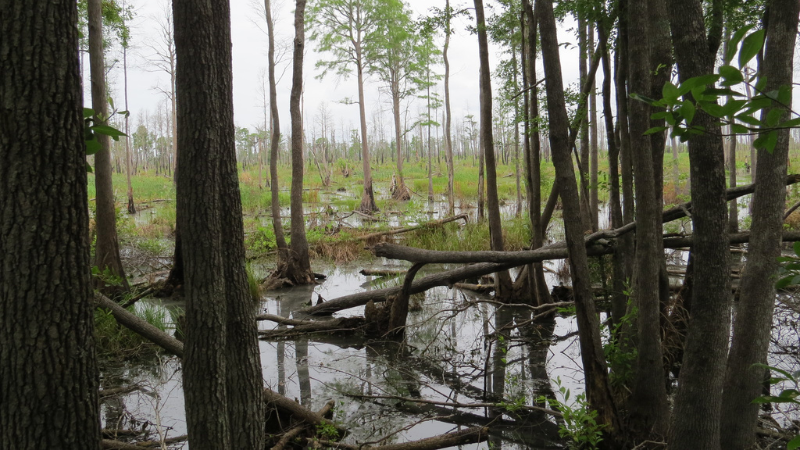
Hoy en día, el refugio sigue siendo un santuario para innumerables especies, incluyendo caimanes americanos, osos negros, pájaros carpinteros de cresta roja, grullas canadienses, nutrias de río y cientos de otros animales autóctonos. Sus humedales de aguas negras, bosques de cipreses, praderas húmedas y turberas flotantes continúan funcionando prácticamente igual que hace miles de años, manteniendo la biodiversidad y protegiendo uno de los ecosistemas de agua dulce más importantes del sureste.
¿Por qué debería importarles a los floridanos el río Okefenokee?
Para los floridanos, el Refugio Nacional de Vida Silvestre Okefenokee es mucho más que un refugio vecino. Aproximadamente una quinta parte del pantano se encuentra dentro de Florida, donde contribuye a la cabecera del río Suwannee, uno de los cursos de agua más emblemáticos del estado. Proteger el Okefenokee ayuda a salvaguardar los recursos hídricos, el hábitat de la vida silvestre, las actividades recreativas al aire libre y el patrimonio natural de Florida.
Para muchos floridanos, el río Okefenokee también ha inspirado un aprecio de por vida por la vida silvestre. Nick Wiley, director ejecutivo de la Fundación de Pesca y Vida Silvestre de Florida, es uno de ellos.
“Crecí en el sur de Georgia, con este lugar, ahora Patrimonio de la Humanidad, prácticamente en el patio de mi casa”, dijo Wiley. “Visitar el Refugio Nacional de Vida Silvestre de Okefenokee cuando era niño me hizo querer ser biólogo especializado en vida silvestre”.”
Su historia refleja el impacto duradero que pueden tener los espacios protegidos. Generaciones de visitantes han recorrido en kayak los senderos de aguas oscuras del Okefenokee, escuchado el canto de las grullas canadienses al amanecer y observado a los caimanes deslizarse por los canales bordeados de cipreses. Experiencias como estas no solo crean recuerdos, sino que inspiran a futuros conservacionistas, científicos, administradores de tierras y defensores que continúan con esta labor de protección.
Hoy, la designación de Patrimonio de la Humanidad por la UNESCO sitúa al Refugio Nacional de Vida Silvestre de Okefenokee junto a algunos de los paisajes naturales más célebres del mundo. Es, además, el primer Refugio Nacional de Vida Silvestre de Estados Unidos en recibir este reconocimiento, lo que otorga prestigio internacional a un lugar que los floridanos y georgianos han atesorado y protegido durante generaciones.
Preguntas frecuentes
¿Forma parte del Refugio Nacional de Vida Silvestre Okefenokee en Florida?
Sí. Casi. El 20 por ciento del Refugio Nacional de Vida Silvestre Okefenokee se encuentra dentro de Florida., Esto la convierte en el segundo sitio declarado Patrimonio de la Humanidad por la UNESCO en Florida. La parte floridana contribuye a las cabeceras del río Suwannee y proporciona un hábitat importante para la fauna autóctona.
¿Por qué se declaró Okefenokee Patrimonio de la Humanidad por la UNESCO?
La UNESCO reconoció el Refugio Nacional de Vida Silvestre de Okefenokee por ser uno de los ecosistemas de turberas subtropicales de agua dulce intactos más grandes del mundo. Su excepcional biodiversidad, sus procesos ecológicos y sus humedales de importancia mundial lo hacen merecedor de reconocimiento internacional.
¿Por qué es importante el río Okefenokee para Florida?
El Okefenokee ayuda a proteger las cabeceras del río Suwannee, sustenta a cientos de especies de vida silvestre autóctonas, mejora la calidad del agua, almacena carbono y preserva las oportunidades de recreación al aire libre que benefician a los floridanos y a las generaciones futuras.