






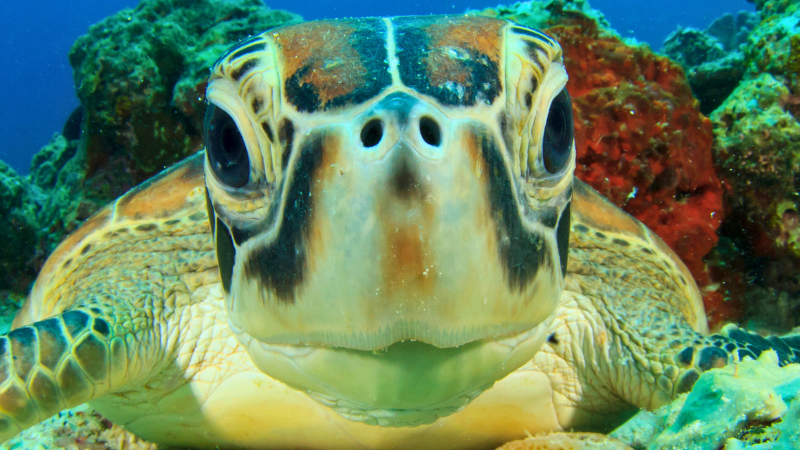
Each spring through summer, Florida’s beaches come alive in a quiet, ancient ritual. Under the cover of darkness, sea turtles emerge from the ocean to lay their eggs in the sand, just as they have for millions of years. Today, this natural wonder is carefully protected. But it wasn’t always that way.
In the late 19th and early 20th centuries, Florida’s sea turtles faced mounting pressure from a rapidly growing coastal population. Turtle eggs were widely harvested for food, considered a delicacy in many communities. Adult turtles, especially green sea turtles, were hunted for their meat, while hawksbill turtles were prized for their beautifully patterned shells, often turned into jewelry and decorative items.
At the same time, Florida’s coastline was beginning to change. What were once quiet, undeveloped nesting beaches slowly gave way to roads, homes, and hotels. By the mid-1900s, beachfront development and artificial lighting had become major threats. Bright lights from buildings disoriented both nesting females and hatchlings, drawing them away from the ocean and toward danger.
The effects were devastating. Sea turtle populations declined sharply, and for a time, their future in Florida seemed uncertain. Species like the loggerhead, green sea turtle, and leatherback all experienced significant losses as nesting success dropped and human impacts increased.
By the 1970s, awareness of the problem had grown. Conservationists, scientists, and policymakers recognized that without intervention, these ancient mariners could disappear from Florida’s shores. Protections soon followed. The Endangered Species Act of 1973 provided federal protections for sea turtles, while Florida strengthened conservation efforts through the Marine Turtle Protection Act. Together, these laws made it illegal to harm sea turtles, their nests, or their eggs and established a framework for long-term conservation. Coordinated efforts began to monitor nesting activity, protect nests, and reduce threats along the coast.
One of the most visible changes came in the form of “lights out” initiatives. Coastal communities began adopting ordinances to limit beachfront lighting during nesting season, helping hatchlings find their way safely to the ocean. Volunteers and researchers also took on a critical role, patrolling beaches, marking nests, and educating the public.
Today, Florida hosts one of the largest sea turtle nesting populations in the world, particularly for loggerheads. Each year, tens of thousands of nests are recorded along the state’s coastline. While challenges remain, including climate change, coastal development, and marine debris, the recovery of sea turtles stands as a powerful example of what conservation can achieve.
The story of Florida’s sea turtles is one of both loss and resilience. It reminds us that even species that have survived for millions of years are not immune to human impact. But it also shows that with awareness, protection, and collective effort, recovery is possible.
As nesting season unfolds once again along Florida’s shores, each set of tracks in the sand tells a story not just of survival, but of a second chance.