




Florida’s springs are among the most unique freshwater ecosystems in the world. Protecting them requires a deep understanding of the plants and animals that call them home, including species that may not be as straightforward as they seem.
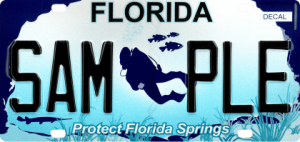
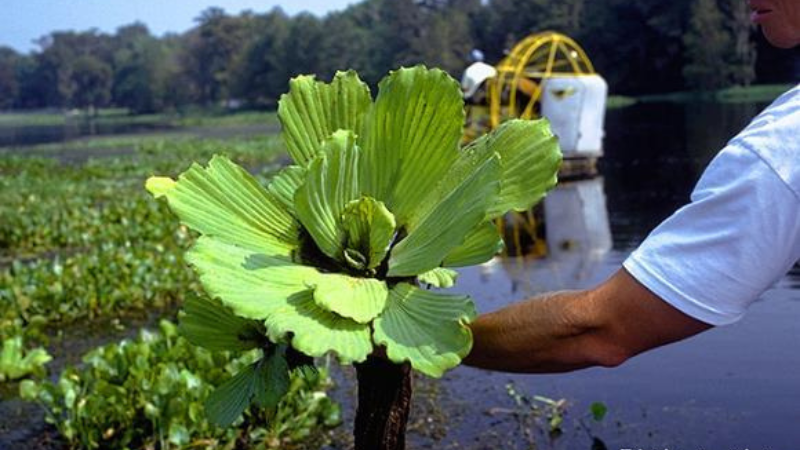
Thanks to funding from our Foundation’s Protect Florida Springs specialty license plate, researchers at Stetson University’s Institute for Water and Environmental Resilience are investigating a long-debated question about water lettuce, a floating aquatic plant commonly found in Florida waterways. The $49,890 grant supports research to determine how native and non-native varieties of water lettuce differ and what role they play in spring ecosystems.
For years, water lettuce has been treated as an invasive plant throughout much of Florida. However, recent genetic research suggests the story is more complicated. Scientists have discovered that some populations may actually be native to Florida, while others appear to have originated elsewhere. Understanding these differences is critical for making informed management decisions in spring-fed rivers and streams.
To answer these questions, researchers have collected water lettuce samples from several spring systems, including Rock Springs Run, the Wekiva River, DeLeon Springs, Alexander Springs, Silver Glen Springs, Juniper Springs, and Gemini Springs. Genetic testing has already revealed important differences among populations. Researchers found evidence of native water lettuce in portions of the Wekiva River and Rock Springs Run, while samples collected from DeLeon Springs and Silver Glen Springs were identified as non-native varieties.
The findings could have important implications for spring conservation throughout Florida. Water lettuce can provide habitat for aquatic wildlife and influence water quality, but dense growth can also create challenges for recreation and ecosystem health. By identifying which populations are native and understanding their ecological roles, resource managers will be better equipped to make science-based decisions that balance conservation and management goals.
Protecting Florida’s springs starts with understanding how these ecosystems work. Thanks to funding from the Protect Florida Springs specialty license plate, researchers are generating the knowledge needed to guide conservation decisions and ensure Florida’s iconic springs remain healthy for generations to come.
Want to help protect Florida’s springs? Purchase a Protect Florida Springs specialty license plate online. Florida is home to more than 700 freshwater springs, and your plate helps fund solutions that keep these remarkable ecosystems healthy and thriving.