


Long before Florida became a haven for protected wildlife, it was a dangerous place to be a bird.

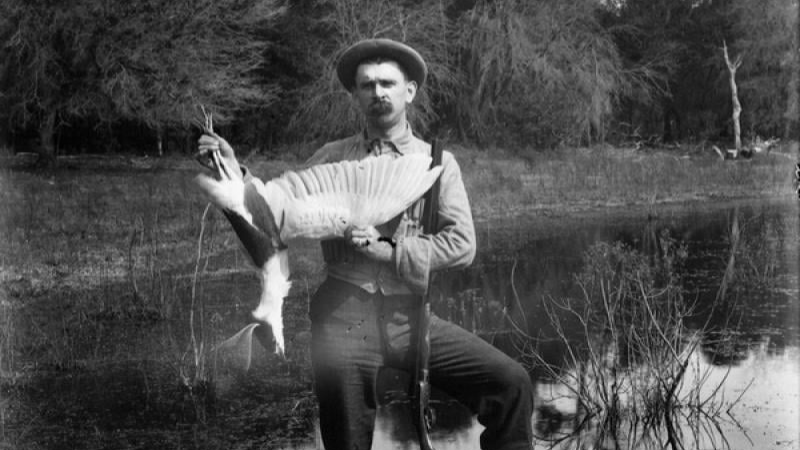
At the turn of the 20th century, Florida’s wetlands and coastlines teemed with life. Pelicans, egrets, herons, and spoonbills nested by the thousands along mangrove islands and shallow lagoons. But their beauty made them targets. Across the country, women’s fashion demanded extravagant hats adorned with feathers and even entire stuffed birds. Florida became ground zero for the plume trade.
Hunters, known as plume hunters, slaughtered birds by the thousands, often killing adults while chicks starved in their nests. Egrets were especially prized during breeding season, when their long, delicate feathers were at their peak. Because those plumes only appeared while birds were nesting, hunters often wiped out entire rookeries in a single visit. Some bird colonies were eliminated in just a few years.
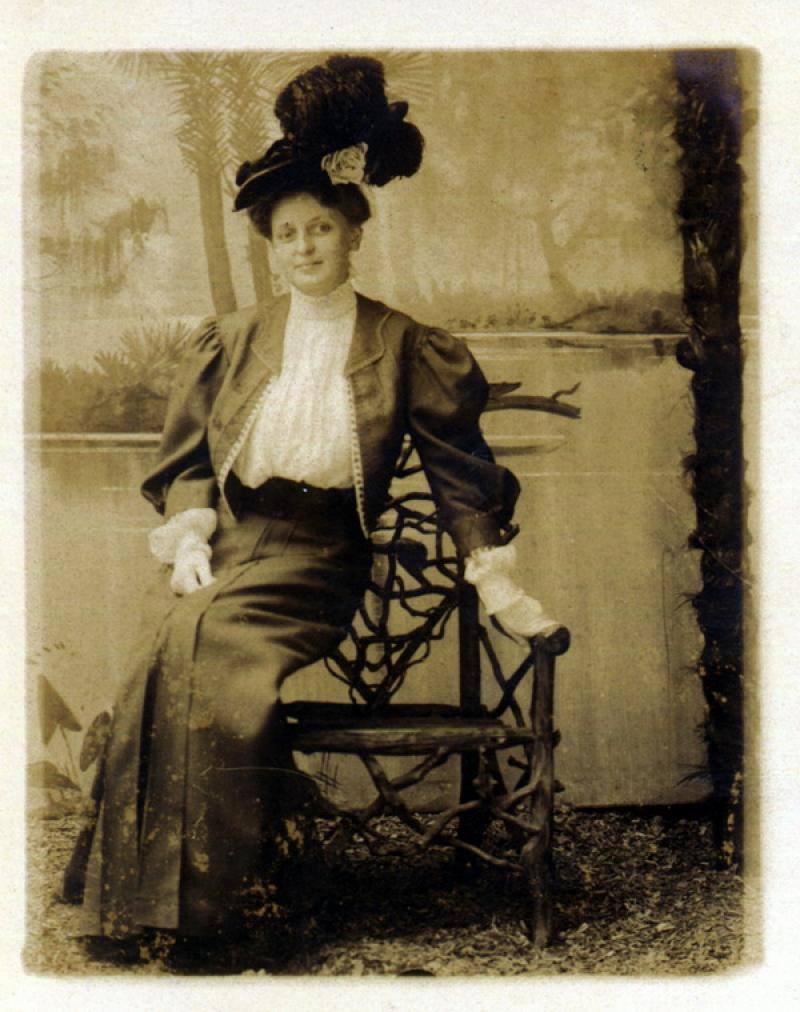
For Florida’s Native peoples, the destruction of bird populations was not just an environmental crisis, it was a cultural one. Members of the Seminole Tribe were drawn into the plume trade as trackers, hired to locate rookeries deep in the wetlands. Over time, many grew uneasy with what they were witnessing. Birds taken for fashion were becoming scarce, including species whose feathers held ceremonial and cultural significance. This tension led to the eventual decision by many Seminoles to step away from the trade.
Naturalists, journalists, and early conservationists began documenting the devastation. Articles and photographs shocked readers and sparked a growing movement to protect wildlife, especially birds that could not survive unchecked commercial hunting.
One small island in the Indian River Lagoon would change everything.

In 1903 President Theodore Roosevelt designated Pelican Island as the nation’s first national bird reservation. Located near Sebastian, Pelican Island was home to brown pelicans and other colonial nesting birds that had been heavily targeted by hunters. The designation was revolutionary. For the first time, the federal government set aside land solely for the protection of wildlife.
Protection on paper, however, was not enough.
Pelican Island’s protection needed enforcement. Enter Paul Kroegel, a German immigrant and boat builder who became the island’s first warden. Armed with little more than determination and a shotgun, Kroegel patrolled the waters day and night, chasing off poachers and standing guard over nesting birds. His efforts paid off. Bird populations slowly began to recover, proving that protection worked when paired with action.
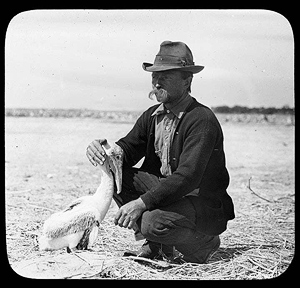
Pelican Island was only the beginning. As awareness grew, more refuges followed. These early victories laid the groundwork for what would become the National Wildlife Refuge System and inspired state and local protections across Florida, such as Key West National Wildlife Refuge (1908), St. Marks National Wildlife Refuge (1931), and Crystal River National Wildlife Refuge (1983). Today, Florida boasts the third-most national wildlife refuges in the country, with 29 protected areas scattered from the Keys to the Panhandle.
The legacy of those first refuges still shapes Florida today. Many of the birds that were once nearly wiped out now soar over wetlands, beaches, and estuaries thanks to laws, protected lands, and decades of conservation work.